

Comparative wound healing in cultured tissues vs ex-vivo tissues
This study compared a 3D cultured skin model with Ten Bio’s tensioned ex vivo TenSkin model for battlefield wound simulation. Results showed TenSkin more closely replicates healing seen in trauma patients, making it a superior platform for injury research.

Spring Conference Season
As the Northern Hemisphere welcomes Spring 2023 the new season of industry conferences and symposia kicks off. And after the return to face to face

Your Skin Research Partner – Ten Bio
service /ˈsəːvɪs/ Noun: ‘the action of helping or doing work for someone’ A note from the Chair Ten Bio’s early experience with our anchor clients has

Ten Bio named finalist in Scotland’s Life Science award.
Ten Bio is proud to announce that our company has been named one of three finalists in Scotland’s Life Science award in the category ‘Innovation


The origins of TenSkin™
Entering our third year since spin out, it’s time to celebrate the origins of our technology which has brought Ten Bio early success in a

‘When I was two, I was nearly new’ ….
‘When I was two I was nearly new’ … with thanks to A. A. Milne for the line from his 1927 poem ‘Now we are

Our differentiation in wound management….
In the previous note from the chairman I emphasized the potential role for Ten Bio in the area of wound management. My reason for that

Dr Paul Campbell seconded to Ten Bio through UK Medical Research Council Innovation Scholarship
Dr Paul Campbell, Reader in Physics at the University of Dundee has recently begun a secondment to Ten Bio through an Innovation Scholarship funded by the UK’s Medical Research Council.

Proud to be presenting at the Society for Investigative Dermatology Annual Meeting in Portland
May 18-21, 2022 We are proud to be exhibiting and presenting at the Society for Investigative Dermatology annual meeting later this week. Our Founder and
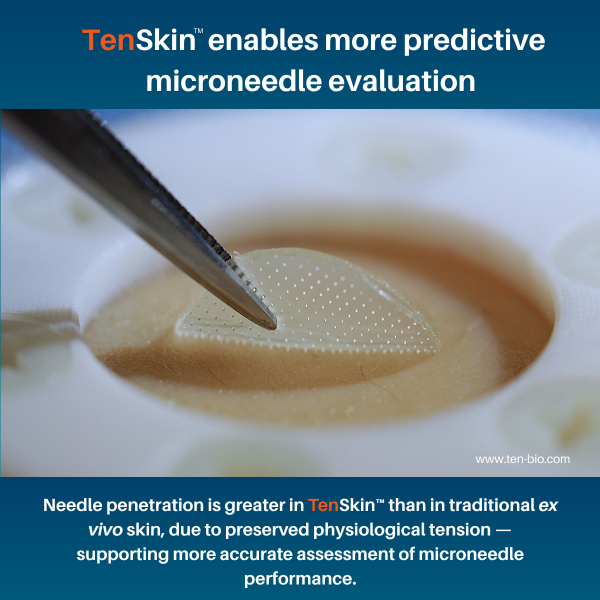
Microneedle testing: why skin tension matters for human-relevant data
Microneedle technologies are advancing rapidly, but accurately assessing their performance depends on how closely test systems reflect real human skin. Preserving physiological tension is a key factor in generating reliable, human-relevant data.
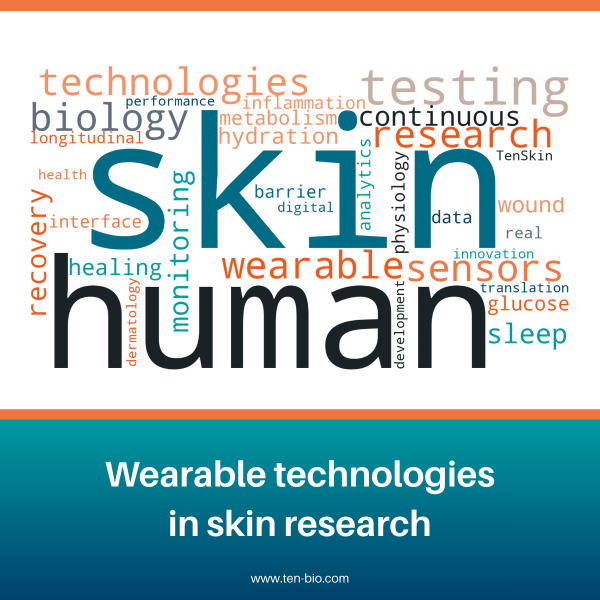
The future of wearable technologies in skin research
Wearable technologies are evolving into platforms that generate continuous insight into skin health and underlying physiology. As devices become more biologically integrated, skin is emerging as a critical interface — shaping what wearables can measure and how reliably they perform. This article explores where skin-interfacing wearables are heading and how TenSkin™ helps bridge early development and real-world use.
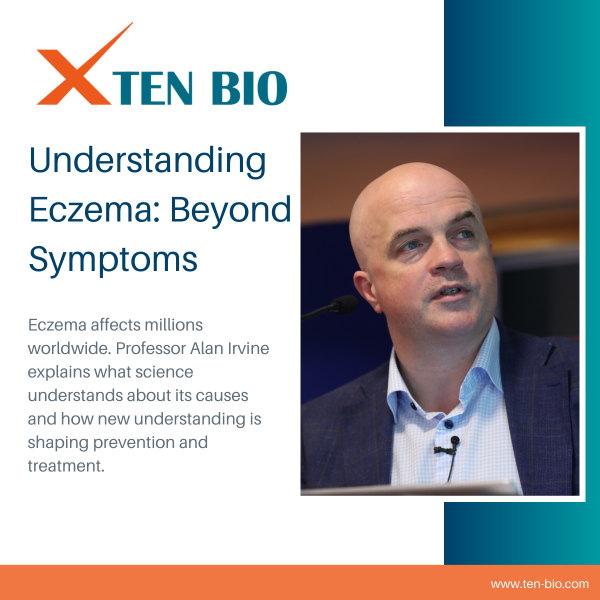
Understanding eczema: Beyond symptoms
Eczema (atopic dermatitis) affects millions worldwide, yet many of its underlying mechanisms are still being uncovered. In this article, Professor Alan Irvine outlines what science understands about the condition’s causes — from the role of the skin barrier and immune pathways to the influence of the microbiome and environment — and explains how these insights are shaping innovative approaches to prevention and treatment.

Bridging the gap: Comparing topical drug absorption and activity in mouse and human skin models
Mouse models remain a cornerstone of dermatology research, but their differences from human skin — in follicle density, barrier function, and wound healing — can limit translation. This article explores the critical factors that shape absorption and pharmacological activity, and considers how human-based models can improve predictive power.

Why psoriasis research needs a human-relevant approach — and how ex vivo models can deliver
Explore how TenSkin™, Ten Bio’s ex vivo human skin model, is helping researchers study psoriasis with greater accuracy and human relevance — reducing reliance on animal testing and improving translational outcomes.

A season of global engagement in skin science and innovation
This spring, Ten Bio joined leading voices in dermatology at events in France, the US, and Australia—spotlighting TenSkin™ as a powerful, human-relevant alternative to animal testing. From photoprotection to microneedle delivery, the message was clear: innovation needs better models.