

Happy Holidays 2023!
The Ten Bio team wishes you Happy Holidays and a Prosperous New Year! As our successful year comes to a close, we would like to thank our clients and business partners for their continued confidence, trust and engagement. We look forward to strengthening our collaborations in 2024 and are excited by the prospect of new partnerships and by the new science that will emerge in the coming year.

Bring me sunshine!
Exploring the effects of sun exposure using explant skin. Enjoyment of sunshine is a quintessential aspect of the human experience. Exposure provides a myriad of

Tension as a key factor in skin responses to pollution
This study explores how physiological tension affects skin responses to ozone pollution using the TenSkin™ model. Findings reveal tension modulates the expression of antimicrobial peptides and markers of oxidative stress and inflammation, highlighting its importance in skin health studies.

Advances and Opportunities in (Pre)Clinical Testing for Cosmetics and Personal Care
We are pleased to share this Global Perspectives Column in EURO COSMETICS Mag written by Deanna Utroske. Ten Bio emphasises scientific discipline and rigour in all of our

Scientific Conferences R Ten Bio
Since Ten Bio launched in the autumn of 2020 our attendance at conferences, symposia etc. has been the central plank to our market engagement strategy.

TenSkin™– its role in reducing animal testing in skin research.
TenSkinᵀᴹ – its role in reducing animal testing in skin research. Generate more predictive preclinical data without animal testing.

Mechanical tension influences the immunocompetency of ex vivo skin tissue
Human-relevant testing methods using donated skin tissue offer a promising alternative to animal models. Our ex vivo culture system restores physiological tension in skin, preserving structure, function, and immune cells like Langerhans cells, enabling immune activation studies for up to seven days.

TenSkin™ – The perfect platform for microneedle applications.
Dr Paul Campbell gives his perspective on potential research avenues with TenSkin™. ‘Having worked directly with the company whilst on secondment over the past year,

Ten Bio is in Japan!
Ten Bio 社は日本にあります. In May this year, Ten Bio will attend the global session of the International Societies for Investigative Dermatology (ISID) to be held

TenSkin™ – the number one choice for skin research
Professor Giuseppe Valacchi has a global reputation for his work in expanding the understanding of cellular and molecular mechanisms that define the physio-pathological responses of skin tissue. In this interview, Professor Valacchi describes why TenSkinTM is his first choice for skin research and why he is pleased to lead Ten Bio’s Scientific Advisory Board . .
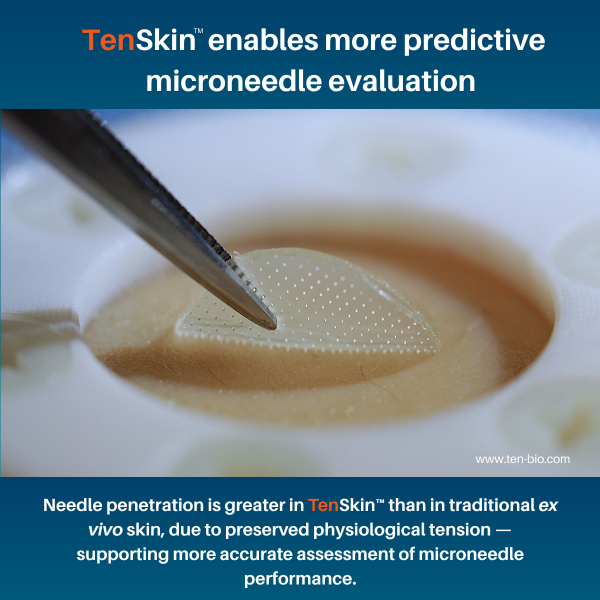
Microneedle testing: why skin tension matters for human-relevant data
Microneedle technologies are advancing rapidly, but accurately assessing their performance depends on how closely test systems reflect real human skin. Preserving physiological tension is a key factor in generating reliable, human-relevant data.
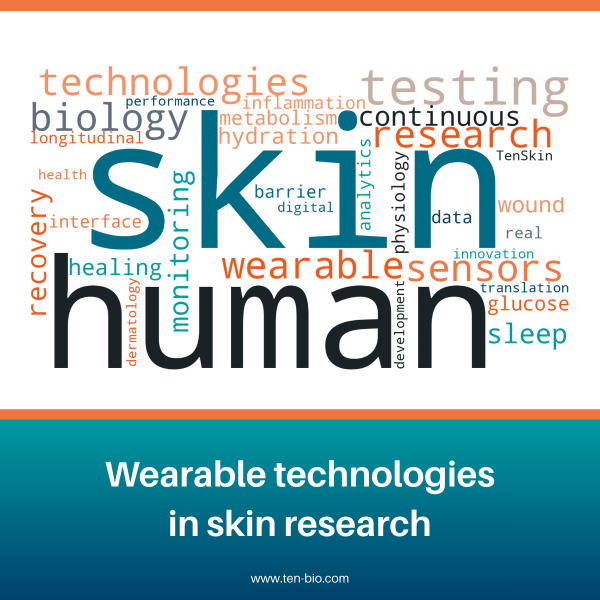
The future of wearable technologies in skin research
Wearable technologies are evolving into platforms that generate continuous insight into skin health and underlying physiology. As devices become more biologically integrated, skin is emerging as a critical interface — shaping what wearables can measure and how reliably they perform. This article explores where skin-interfacing wearables are heading and how TenSkin™ helps bridge early development and real-world use.

Understanding eczema: Beyond symptoms
Eczema (atopic dermatitis) affects millions worldwide, yet many of its underlying mechanisms are still being uncovered. In this article, Professor Alan Irvine outlines what science understands about the condition’s causes — from the role of the skin barrier and immune pathways to the influence of the microbiome and environment — and explains how these insights are shaping innovative approaches to prevention and treatment.

Bridging the gap: Comparing topical drug absorption and activity in mouse and human skin models
Mouse models remain a cornerstone of dermatology research, but their differences from human skin — in follicle density, barrier function, and wound healing — can limit translation. This article explores the critical factors that shape absorption and pharmacological activity, and considers how human-based models can improve predictive power.

Why psoriasis research needs a human-relevant approach — and how ex vivo models can deliver
Explore how TenSkin™, Ten Bio’s ex vivo human skin model, is helping researchers study psoriasis with greater accuracy and human relevance — reducing reliance on animal testing and improving translational outcomes.

A season of global engagement in skin science and innovation
This spring, Ten Bio joined leading voices in dermatology at events in France, the US, and Australia—spotlighting TenSkin™ as a powerful, human-relevant alternative to animal testing. From photoprotection to microneedle delivery, the message was clear: innovation needs better models.