The evolution of dermo-cosmetics
Dermo-cosmetics are skincare products that sit at the intersection of traditional cosmetics and dermatology science. They use biologically active ingredients supported by skin science and clinical research to improve skin health and address specific dermatological concerns. The advances in personalized skin and hair care is reshaping how dermo-cosmetics is defined, moving it further toward clinically relevant and biologically informed approaches¹. What was once a niche extension of dermatology is now becoming a core part of how skin health is approached in both clinical and cosmetic contexts.
Today, the dermo-cosmetics field increasingly emphasizes robust and evidence-based science with applications extending beyond aesthetic concerns into the management of inflammatory and chronic skin conditions.
Following regulatory efforts2,3 to reduce animal testing for drugs and cosmetics globally, in vitro, in vivo, and ex vivo methods have become central to preclinical product development. Alongside advances in alternative models and omics technologies, these approaches enable a deeper understanding of how skin responds to environmental and biological stressors.
Together, these shifts are redefining what constitutes biologically relevant evidence in product development. Rather than relying on surface-level outcomes, products are increasingly expected to demonstrate effects on specific biological pathways, including inflammation, barrier repair, and oxidative stress.
This in turn shifts the focus to ingredient innovation. Rather than supporting isolated cosmetic claims, bio-actives such as peptides and exosomes are increasingly being studied for their effects on skin biology, including repair processes, cellular signaling, and barrier function⁴. Peptides, once associated with collagen boosting, are now part of a broader shift toward bio-actives designed to support repair, regeneration, and long-term skin function.
Exosomes are attracting growing attention for their role in cellular signaling and skin regeneration. As naturally occurring extracellular vesicles involved in cellular signaling, they are increasingly being investigated for their potential to influence repair pathways, inflammatory responses, and tissue homeostasis. This reflects broader interest across the dermo-cosmetics sector in biologically active technologies that move beyond surface-level effects toward functional modulation of skin biology. At the same time, microbiome-focused technologies are reframing skin as a dynamic biological ecosystem, with growing attention on how microbial balance influences immune signaling and barrier integrity.
However, despite these rapid innovations, the dermo-cosmetics industry faces a critical challenge. Many of these next-generation technologies lack clinically relevant testing. Traditional in vitro models can struggle to capture complex skin biology, immune interactions, and microbiome dynamics.
The shift toward evidence-based development
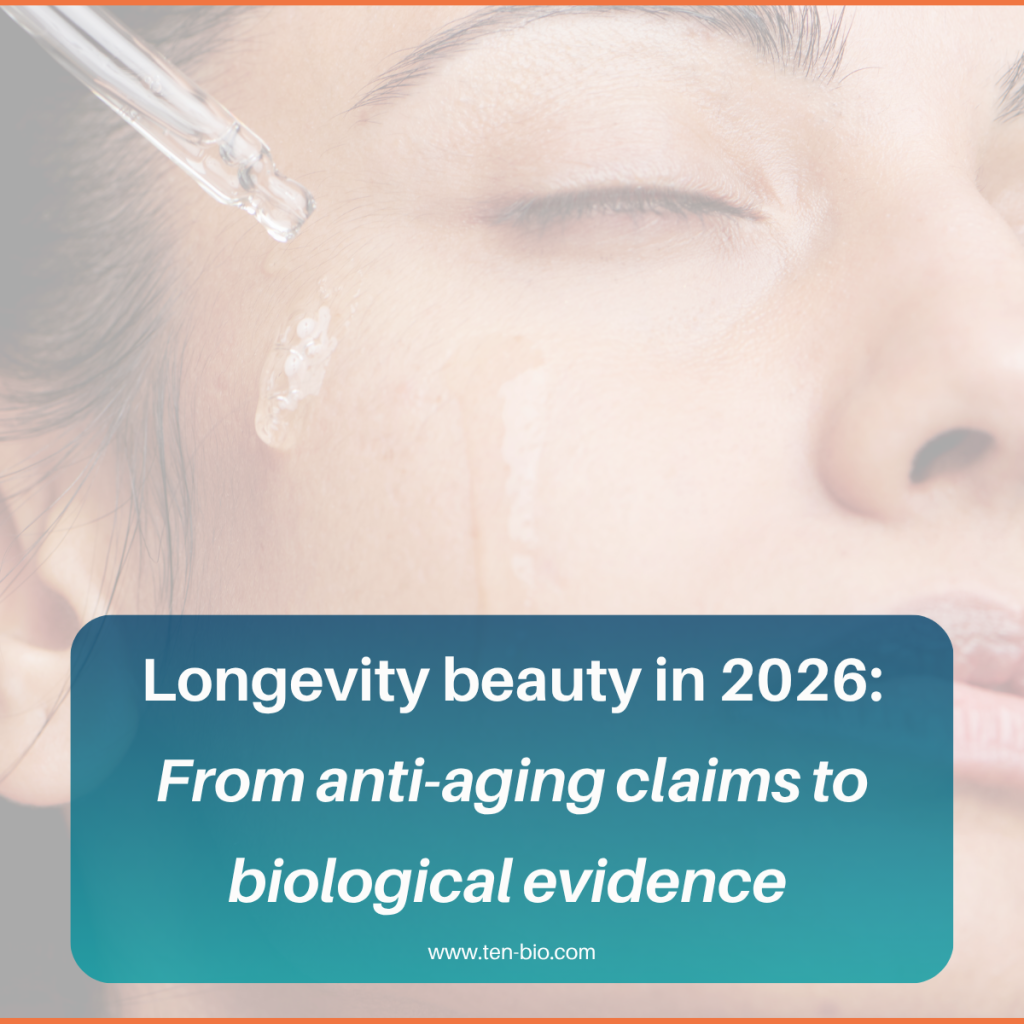
Longevity beauty is not simply a rebranding of anti-aging. It represents a broader shift in how skin aging is understood: not simply as an aesthetic concern, but as a biological process to measure, modulate, and potentially optimize5. This shift is moving skincare beyond aesthetics and into a framework rooted in prevention, regeneration, and functional tissue health. At its core, longevity reflects a convergence of disciplines once considered separate: dermatology, biotechnology, regenerative medicine, systems biology, and consumer skincare. Across the dermo-cosmetic industry, there is growing interest in predictive, human-relevant models that can improve translational confidence before clinical testing.
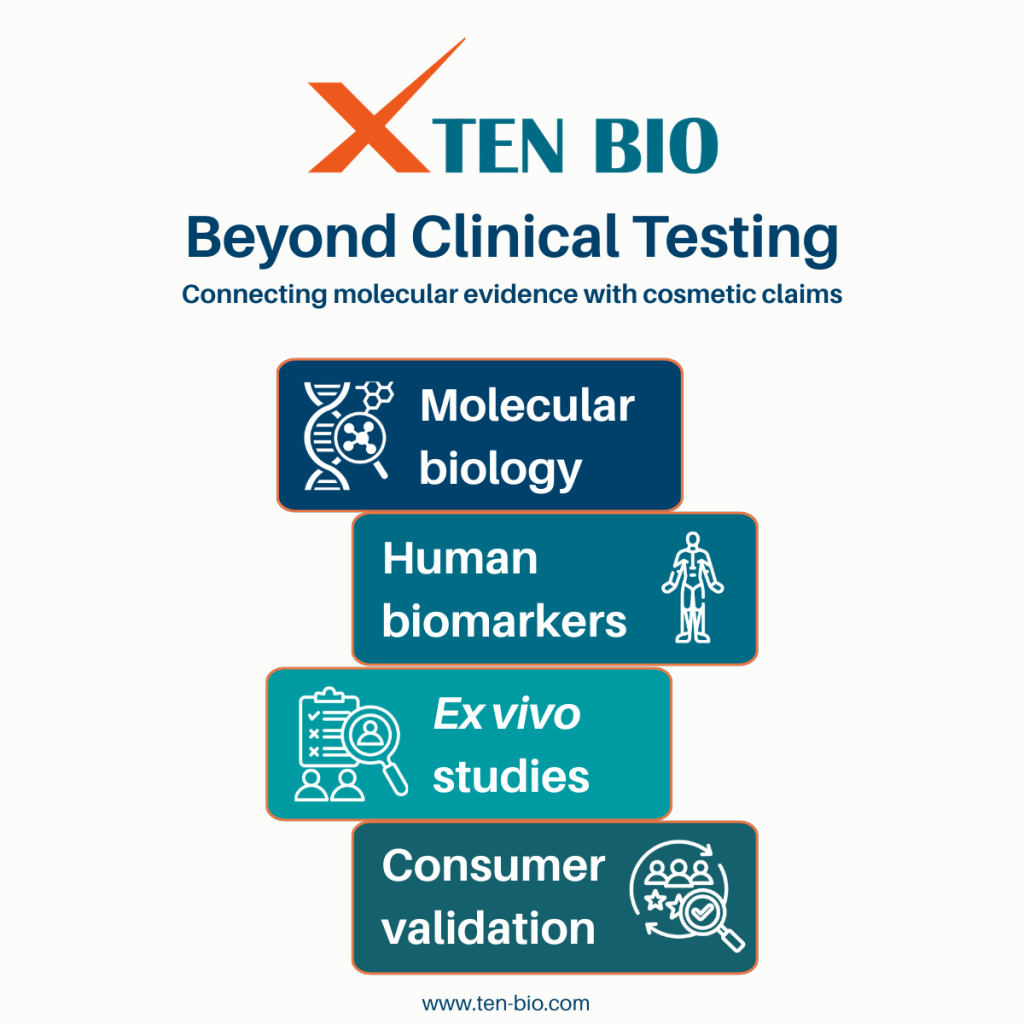
Efficacy claims increasingly need to be supported by biologically relevant evidence rather than formulation alone. As dermo-cosmetic innovations evolve into biologically active systems, validation has become a defining challenge for the dermo-cosmetics sector.
The future of dermo-cosmetic validation
Modern dermo-cosmetic validation is shifting toward mechanistic, biomarker-driven evidence. Recent clinical studies⁶˒⁷ show that dermo-cosmetic products are increasingly evaluated using integrated biological endpoints, including molecular biomarkers, microbiome composition changes, and structural skin parameters. Testing systems capable of measuring parameters such as permeability, hydration, and barrier integrity are becoming increasingly important in dermo-cosmetic validation. One widely used example is trans epidermal water loss (TEWL), a quantitative indicator of barrier competence used to assess skin barrier integrity. Similarly, hydration mapping and permeability provide critical differentiation between formulations that actively support epidermal function and those that produce only transient occlusive effects without addressing underlying biological processes.
Closing the translational gap
As a result, the focus is beginning to shift. The next competitive advantage is increasingly linked to access to better translational models. Leading companies are prioritizing predictive, human-relevant research platforms, and the conversation is moving beyond product innovation alone toward the broader question of innovation infrastructure.
As longevity beauty continues to evolve, the boundaries between dermo-cosmetics, biotechnology, and regenerative medicine may become increasingly blurred. Companies developing biologically active skin technologies may require capabilities traditionally associated with biopharma, including translational validation, biomarker analysis, and human-relevant testing infrastructure. This may accelerate strategic partnerships and cross-sector collaborations as the sector adapts to more biologically complex product development.
Despite these advances, a significant translational gap still exists between early discovery and clinical validation. This is increasingly where innovation is either accelerated or lost. The challenge is not only developing new actives but demonstrating biological relevance early enough to guide meaningful development decisions.
Ex vivo human skin models are emerging as an essential bridge in this landscape. By preserving aspects of native skin biology, they allow researchers to study the complexity of native tissues within controlled, repeatable experimentation, providing a more biologically relevant view of skin function. This enables more biologically relevant insights into key skin processes and helps connect early-stage findings with responses observed in native human tissue.
This approach is reflected in our ex vivo model TenSkin™, which is designed to preserve native tissue architecture and biological signaling while enabling controlled, repeatable experimentation. More broadly, this reflects a wider shift toward human-relevant testing systems that can strengthen biological understanding earlier in development. As longevity continues to influence dermo-cosmetic innovation, competitive advantage is increasingly linked not only to novel ingredients, but to the quality of the biological evidence used to validate them.
Ten Bio team May 2026
References
[1] Global Market Insights. (2026). Dermocosmetics Market Size & Share, Forecasts Report 2035. Global Market Insights. https://www.gminsights.com/industry-analysis/dermocosmetics-market
[2] European Parliament & Council of the European Union. (2009). Regulation (EC) No 1223/2009 of the European Parliament and of the Council on Cosmetic Products. Official Journal of the European Union. https://eur-lex.europa.eu/eli/reg/2009/1223/oj/eng
[3] U.S. Food and Drug Administration. (2025). Roadmap to Reducing Animal Testing in Preclinical Safety Studies. U.S. Department of Health and Human Services. https://www.fda.gov/files/newsroom/published/roadmap_to_reducing_animal_testing_in_preclinical_safety_studies.pdf
[4] Ash, M., Zibitt, M., Shauly, O., Menon, A., Losken, A., & Gould, D. (2024). The innovative and evolving landscape of topical exosome and peptide therapies: A systematic review of the available literature. Aesthetic Surgery Journal Open Forum, 6, ojae017. https://doi.org/10.1093/asjof/ojae017
[5] Farran Graves, L. (2026, April 13). Longevity beauty: How 2026 is redefining skincare. Forbes. https://www.forbes.com/sites/laiafarrangraves/2026/04/13/longevity-beauty-how-2026-is-redefining-skincare/
[6] Wang, D.-Q., Li, X., Zhang, R.-Y., Yuan, C., Yan, B., Humbert, P., & Quan, Z.-X. (2023). Effects of investigational moisturizers on the skin barrier and microbiome following exposure to environmental aggressors: A randomized clinical trial and ex vivo analysis. Journal of Clinical Medicine, 12(18), 6078. https://doi.org/10.3390/jcm12186078
[7] Jesus, A., Silva, J. P., Cidade, H., Cruz, M. T., Sousa, E., & Almeida, I. F. (2026). Human photoaging skin models for the efficacy evaluation of anti-aging ingredients: Advances on clinical and ex vivo studies. European Journal of Pharmaceutics and Biopharmaceutics, 223, 115059. https://doi.org/10.1016/j.ejpb.2026.115059